

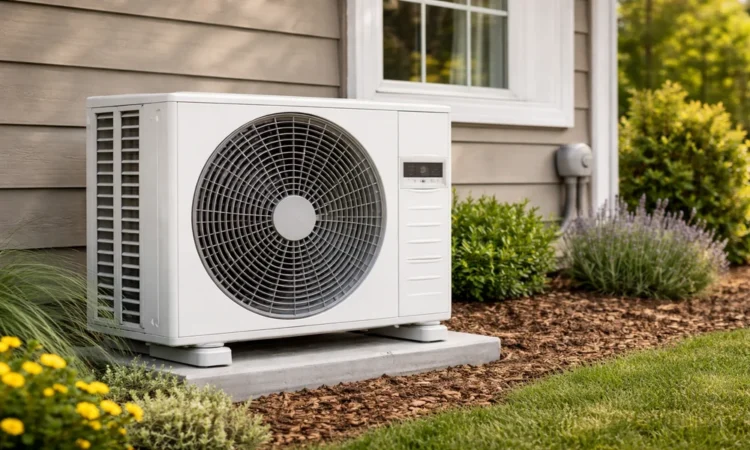
Two heat pump quotes for the same house can differ by thousands of dollars and still list the same tonnage and brand. The gap almost always sits in the lines most homeowners skim: what happens to the ducts, whether the indoor coil is new, how the outdoor unit is anchored and who pulls the permit. Reading a quote for HVAC installation in Jacksonville means checking each of those lines against what the house actually needs, not just comparing the total at the bottom.
Northeast Florida adds its own wrinkles. Air handlers here often live in garages, hall closets and hot attics, ducts run through spaces that hit well above 120 degrees in summer, and outdoor units have to survive hurricane season. A quote that ignores those conditions can look cheaper on paper and cost more within two summers.
For homeowners comparing bids, Jacksonville HVAC Installation work from A/C Masters Enterprises centers on heat pumps, from central split systems with matched air handlers to ductless multi zone setups, along with new and remodeled ductwork. The Fairways Forest contractor holds Florida license CAC1823721 and offers second opinions, so the simplest next step is to text a photo of the quote you already have to 904-672-8833 and ask which lines are missing.
The Equipment Section
Matched system and AHRI reference number
A heat pump’s efficiency rating belongs to a specific outdoor unit paired with a specific indoor air handler or coil, not to the outdoor unit alone. The AHRI directory assigns each certified pairing a reference number and suggests getting that number from the installing contractor. If the quote lists only the condenser model, ask for the air handler model and the reference number, then look it up yourself.
SEER2 and HSPF2 ratings
These are the cooling and heating efficiency figures under the current federal test method. In Jacksonville, cooling dominates the bill, so SEER2 carries more weight than HSPF2. A higher number only holds if the matched pair above is what actually gets installed.
Refrigerant type
New equipment ships with R-454B or R-32 rather than R-410A. The quote should say which, since the newer refrigerants are mildly flammable and many indoor units carry a leak detection sensor that needs proper wiring.
Load calculation
Look for a line stating the system was sized by an ACCA Manual J calculation, which Florida’s energy code ties to equipment selection. A quote that simply matches the old tonnage is guessing, and an oversized heat pump short cycles and leaves a Florida house clammy.
The Installation Scope
Auxiliary heat strips
Most local heat pumps include electric resistance strips for the few cold nights each winter. The quote should list their kilowatt size and confirm an outdoor temperature lockout or staging control. The Department of Energy notes that controls preventing unnecessary strip operation are among the most commonly violated heat pump installation practices, and strips running when they don’t need to show up fast on a JEA bill.
Line set
This is the copper pair connecting indoor and outdoor units. “Reuse existing” is sometimes fine if the lines are the right size, clean and leak tested. “Replace” costs more and is usually wiser on an older system, a size change or a line buried in a slab. Either way, the quote should mention insulation on the suction line.
Electrical
A new disconnect, whip and breaker sized to the equipment’s nameplate are standard line items. Heat strips can require a larger circuit than the old system had, which sometimes means panel work the quote should name up front.
Pad and hurricane anchoring
Florida code requires outdoor units to be secured against wind. Expect a new pad or riser and tie down hardware listed, especially near the beaches or in flood prone streets where a raised stand makes sense.
Condensate drain and safety switch
The primary drain, trap, auxiliary pan for attic or closet units and a float switch that cuts power on overflow should all appear. In a humid climate, this is where a cheap install shows up as a stained ceiling a year later.
The Ductwork Lines
Duct inspection or static pressure test
A heat pump moves a lot of air, and old ducts are often undersized, crushed or leaking. A quote that mentions measuring static pressure shows the contractor checked whether existing ducts can carry the new system’s airflow.
Reseal, modify or replace
Read which one the quote promises. Resealing with mastic fixes leaks at joints. Modifying adds returns or resizes trunks. Full replacement makes sense when flex duct in the attic has sagged, torn or lost insulation. Attic ductwork in Florida should carry R-8 insulation.
Plenums and transitions
New air handlers rarely line up with old plenums. Custom transitions should be listed rather than left to “field fit as needed,” which tends to mean gaps sealed with tape.
The Paperwork and Terms
Permit and inspections
Replacing a system in the city requires a mechanical permit through the Jacksonville Building Inspection Division. The quote should say the contractor pulls it and that the price includes the final inspection. Jobs over $15,000 also require a recorded Notice of Commencement.
Removal and refrigerant recovery
Haul away of the old equipment and proper recovery of its refrigerant belong on the quote, not as an afterthought on the invoice.
Warranty
Separate the manufacturer’s parts warranty from the contractor’s labor warranty. Parts coverage often depends on online registration within a set window after install, so ask who handles that. A labor warranty of only one year on a heat pump expected to run twelve or more Florida summers deserves a question.
Payment schedule
A reasonable deposit with the balance due after startup and inspection protects both sides. Full payment before the permit closes leaves the homeowner with little leverage if something fails inspection.
A quote that covers every line above is not automatically the right one, but one that skips several of them is telling you where the surprises will come from. The cheapest bid often turns out to be the one that left the ducts, the drain and the heat strip controls for someone else to discover.


